
Selling a Dubai investment property while living in the UK is possible, and you may not need to travel to Dubai to complete the sale. However, selling from overseas involves a few extra things to arrange, particularly when it comes to paperwork, appointing someone to act on your behalf, and receiving the money.
Whether you own a rented apartment, a ready property, or an off-plan investment, the process will depend on your property's ownership status, any outstanding mortgage, and the terms agreed with the buyer.
This guide explains how to sell your Dubai property from the UK, what documents you may need, the costs involved, possible UK tax obligations, and how to manage the process from abroad.
Can You Sell a Dubai Property Without Travelling From the UK?
Yes. If you live in the UK, you can generally arrange the sale of your Dubai property without being physically present for every stage.
A Dubai real estate agent can help with marketing, viewings and buyer negotiations. You may also be able to appoint an authorised representative to complete certain formalities on your behalf.
Do You Need a Power of Attorney to Sell Remotely?
A Power of Attorney (POA) allows another person to carry out specified actions on your behalf. If you cannot attend the final transfer, an appropriately authorised representative may be able to handle it for you.
Not every remote sale follows the same procedure, so check the current requirements before preparing or signing a POA.
You can review property registration services and procedures through the Dubai Land Department's official website.
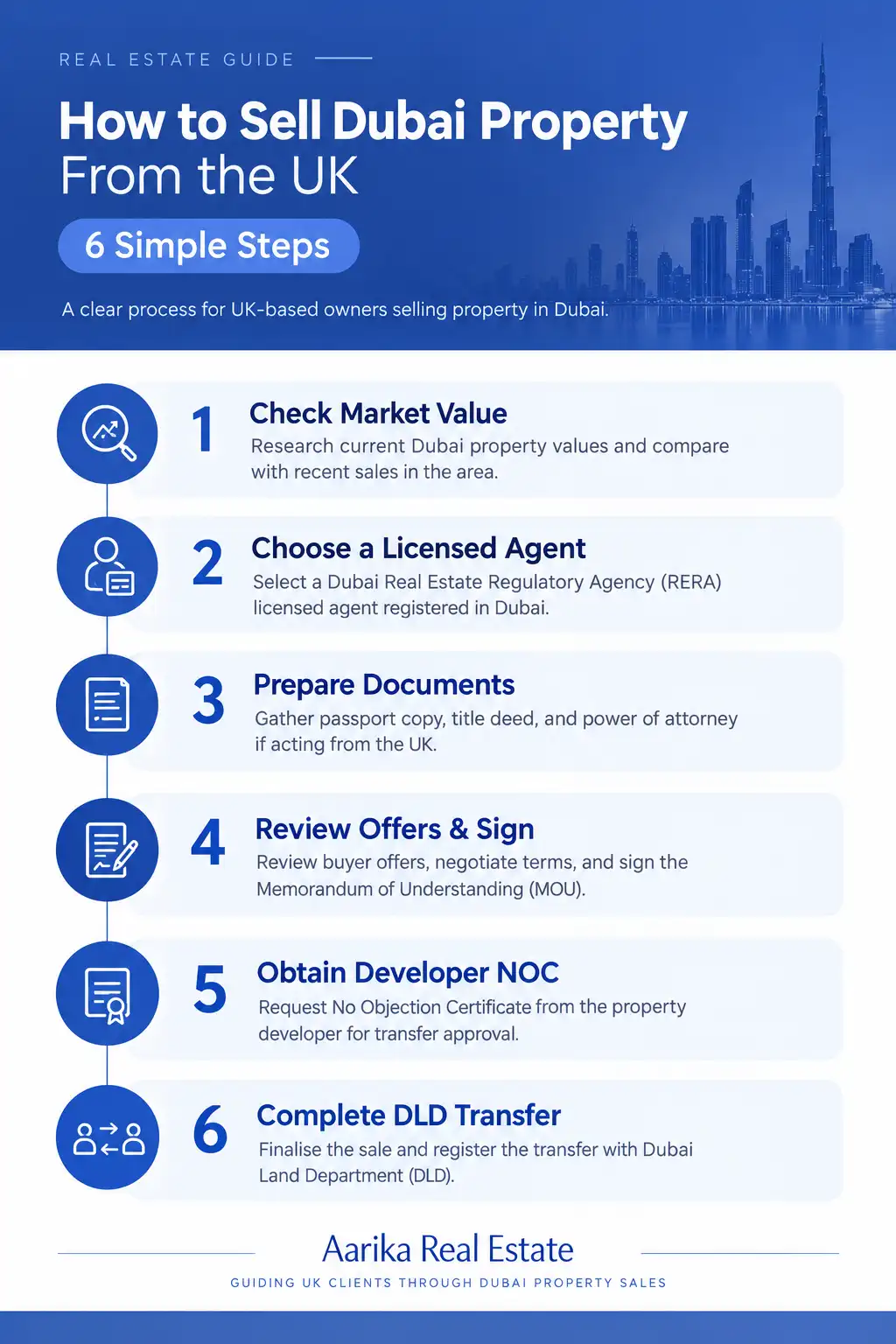
How to Sell Your Dubai Investment Property From the UK: Step by Step
Selling a property from the UK follows many of the same steps as selling while living in Dubai. The main difference is that you need to plan how documents, viewings, approvals, and the final transfer will be handled while you are abroad.
1. Check Your Property's Current Market Value
Before listing your property, find out what similar properties are actually selling for.
Look at recent transactions in the same building or neighbourhood, rather than relying only on advertised asking prices. Apartment size, floor level, views, condition, furnishing, and tenancy status can all affect the price buyers are willing to pay.
If the property is currently rented, compare the expected selling price with the income you receive from keeping it. Aarika's guide on calculating net rental yield in Dubai can help you understand the income side of that decision.
2. Choose a Licensed Dubai Real Estate Agent
Working with an experienced Dubai real estate agent can make selling from the UK easier, especially if you cannot attend viewings or meet potential buyers.
Before appointing an agent, check their licence and registration details, experience with similar properties, and how they plan to market your property.
The agent and seller will normally formalise the listing arrangement through the applicable DLD brokerage agreement, commonly known as Form A.
3. Prepare Your Property and Documents
Getting the paperwork ready early can prevent delays once you find a buyer.
Your agent may need access to the property for photographs, inspections and viewings. If it is tenanted, viewings and access should be arranged in line with the tenancy agreement and applicable rules.
It is also worth checking whether service charges, utility bills or mortgage payments are outstanding.
If you are unfamiliar with the checks buyers may carry out, read our Dubai real estate due diligence checklist.
4. Review Offers and Sign the Sale Agreement
Once a buyer makes an offer, you can review the proposed price, payment method, deposit, and expected completion date.
If both parties agree, the terms are commonly recorded in a Memorandum of Understanding (MOU), known as Form F.
A deposit of around 10% is common in resale transactions, but the amount, handling, and circumstances in which it may be returned depend on the agreement. Make sure you understand those terms before signing.
5. Obtain the Developer's No Objection Certificate
For transactions requiring a developer's No Objection Certificate (NOC), the seller generally needs to arrange it before ownership can be transferred.
The developer may check whether service charges and other relevant amounts have been settled. The exact documents, fees, and processing time depend on the developer and property.
6. Complete the Ownership Transfer
The final transfer is completed through the applicable DLD registration process, often at a Real Estate Registration Trustee office.
The parties or their authorised representatives provide the required documents, complete payment arrangements, and register the change of ownership. If the property has a mortgage, the bank's settlement and release requirements must also be completed.
Do not assume the transfer funds can automatically be sent directly to your UK account. Confirm the permitted payment and disbursement arrangements before agreeing to completion.
What Documents Do You Need to Sell a Dubai Property?
Having your documents ready before you list the property can make the process easier, especially when you're dealing with everything from the UK.
The exact requirements vary, but sellers commonly need the following:
- Valid passport: To confirm your identity and ownership details.
- Title deed: Evidence of ownership for a completed property.
- Emirates ID: If applicable to your circumstances or the service being used.
- Mortgage documents: Including outstanding loan details and bank clearance or release documents where required.
- Tenancy agreement: If the property is currently rented.
- Developer NOC: Where required, normally obtained during the selling process.
- Power of Attorney: If an authorised representative will act for you.
- Relevant payment and clearance records: Such as service charge statements and other documents requested for the transfer.
For an off-plan property, you may instead need the registered sale agreement, Oqood or other applicable registration evidence, developer statements and resale approval.
Your agent or conveyancing professional should confirm which documents are required for your particular property before you begin.
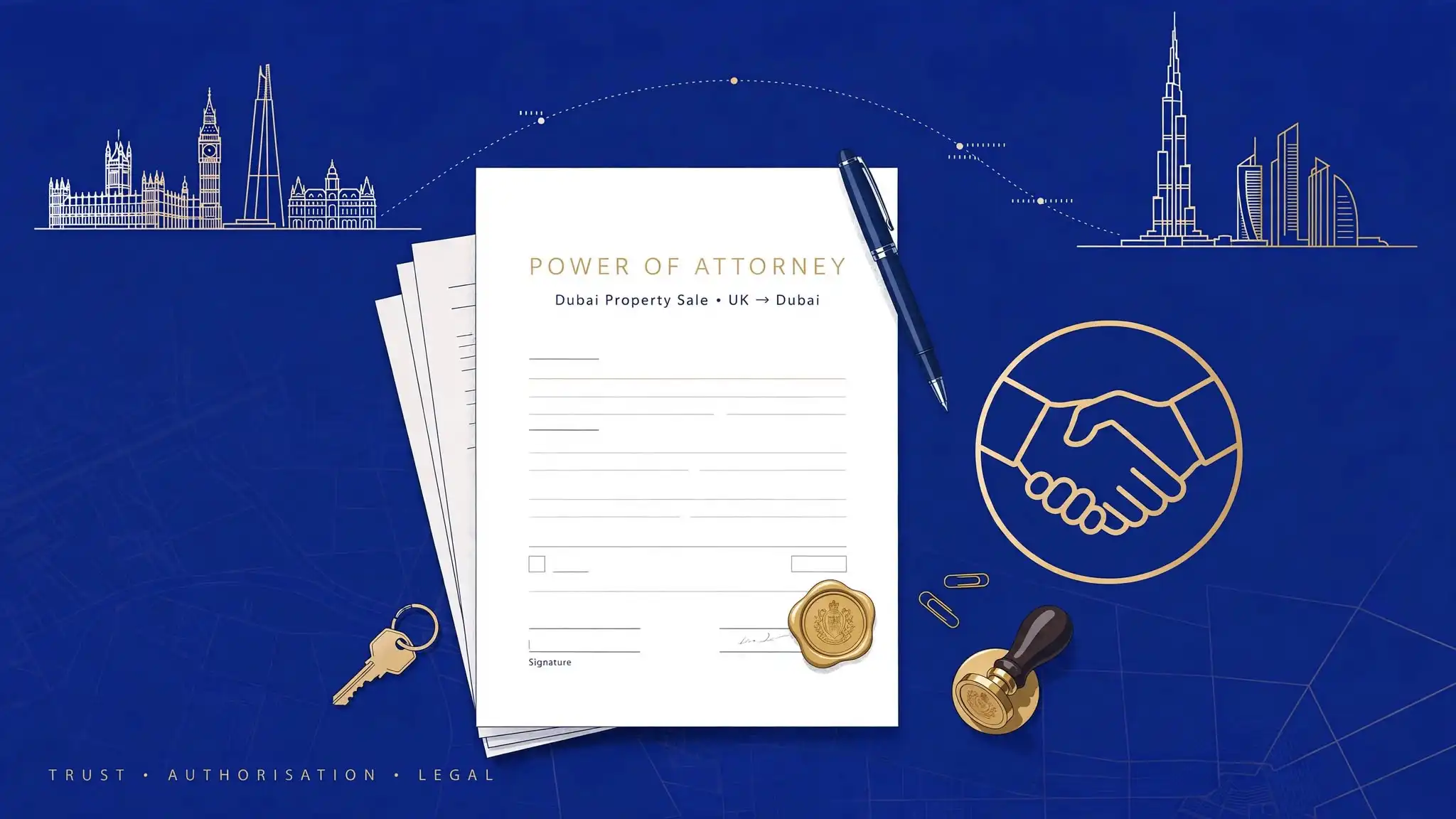
How Does Power of Attorney Work for UK-Based Sellers?
A Power of Attorney can be useful when you own a property in Dubai but cannot travel there to complete the sale.
It gives a nominated person permission to carry out specific tasks on your behalf. Depending on what the document authorises and what the relevant authorities accept, those tasks may include signing transaction documents, dealing with the developer, or attending the final transfer.
Appointing a Representative in Dubai
You might appoint a trusted individual or qualified legal professional to represent you.
Before doing so, check exactly what powers they will have. A POA should clearly identify the property and the actions the representative is allowed to take.
It is particularly important to understand whether the representative can sign contracts, agree to changes to the sale terms, or receive money on your behalf.
You should remain involved in important decisions, even when someone else is handling the paperwork.
Preparing and Validating a POA From the UK
If you prepare a POA in the UK, it may need notarisation and further legalisation or attestation before it can be accepted in Dubai.
The UK Government's document legalisation guidance explains the UK legalisation process. You should also check the UAE Ministry of Foreign Affairs requirements and confirm acceptance with the Dubai authority handling your sale.
Some UAE notarial services may offer digital procedures, but availability and eligibility should be confirmed before relying on them.
For a remote sale, it is sensible to have the POA checked by an appropriately qualified professional before signing it.
How Much Does It Cost to Sell a Property in Dubai?
The amount you receive from selling your Dubai investment property will not necessarily be the same as the agreed sale price.
Agent commission, developer charges, mortgage settlement, and other transaction costs can affect how much money you receive.
Before listing, ask for a written breakdown of the expected costs and which party is responsible for paying them.
For the applicable registration procedures and published charges, refer to the Dubai Land Department.
How to Estimate Your Net Sale Proceeds
A useful starting point is to calculate what remains after your outstanding mortgage and seller-paid costs have been deducted.
For example, imagine you sell a Dubai apartment for AED 1,500,000.
These figures are illustrative, not quotations or standard charges. Actual costs depend on the sale agreement, the property and the transaction.
The AED 960,000 is also not the same as your taxable capital gain. UK tax calculations consider different factors, including your original purchase cost and eligible expenses.
Before accepting an offer, prepare a realistic estimate of the amount you expect to receive.
Will You Pay UK Capital Gains Tax When Selling Dubai Property?
If you're a UK tax resident and sell your Dubai property at a profit, you may need to pay UK Capital Gains Tax (CGT), even though the property is located overseas.
The taxable gain generally depends on the purchase and selling prices, allowable expenses, and applicable tax reliefs. Exchange rates can also affect the gain calculated in pounds sterling.
For more information, read HMRC's guidance on selling overseas property.
Before selling, consider speaking with a qualified UK tax adviser to understand your potential tax obligations.
How Do You Transfer Dubai Property Sale Proceeds to the UK?
After selling your Dubai property, you can arrange to transfer the proceeds to your UK bank account.
Depending on the transaction and banking requirements, you may need a UAE bank account or another approved payment arrangement.
Before completing the sale, confirm how you will receive the funds with your bank and the relevant Dubai registration trustee.
Converting AED to GBP
If you intend to move the money to the UK, the exchange rate can make a noticeable difference to the amount you receive.
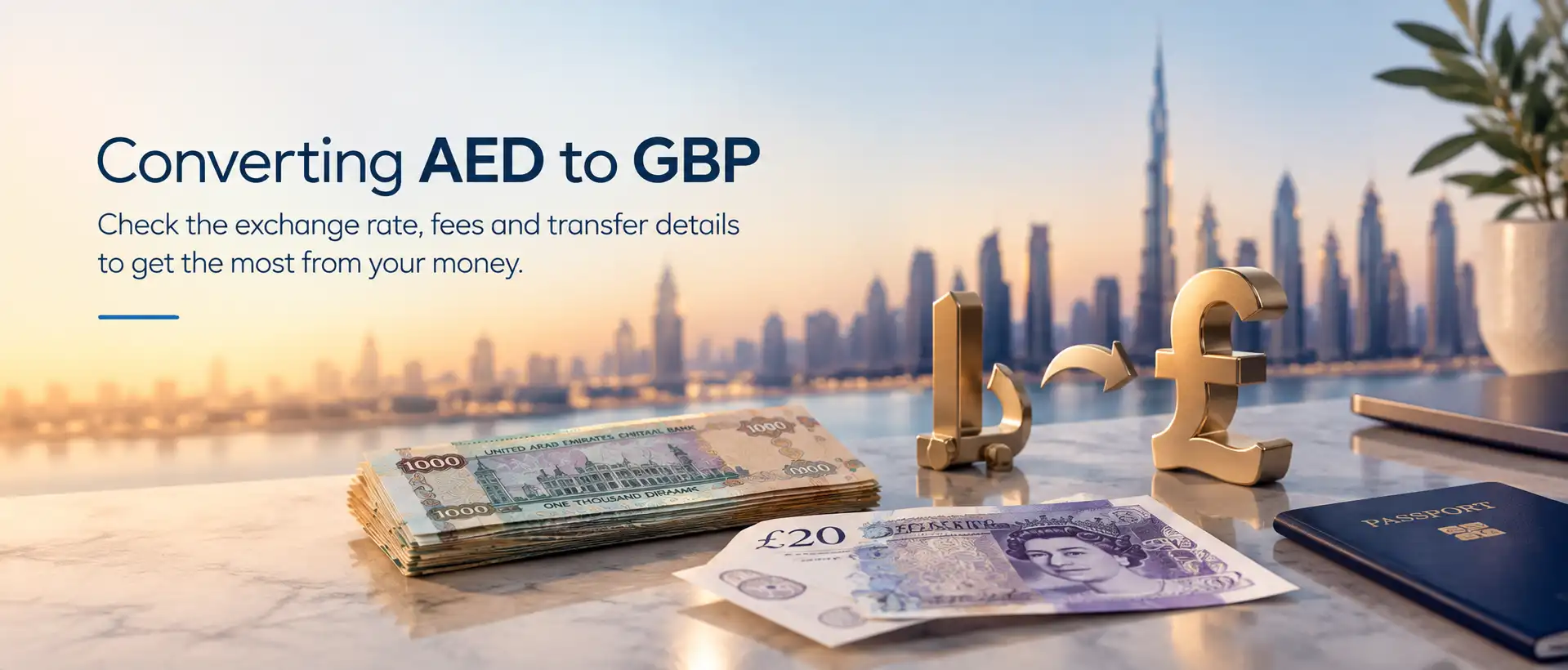
For a large transfer, compare the exchange rate offered, any margin included in that rate, transfer fees and the amount that will actually arrive in your UK account.
You should also ask about transfer limits, source-of-funds checks and supporting documents. Banks may request the sale agreement, proof of ownership or evidence of the completed transaction.
What If Your Dubai Investment Property Is Rented, Mortgaged or Off-Plan?
Not every Dubai investment property can be sold in exactly the same way. If your apartment has tenants, an outstanding mortgage, or is still under construction, there may be additional steps to complete.
Selling a Tenanted Property
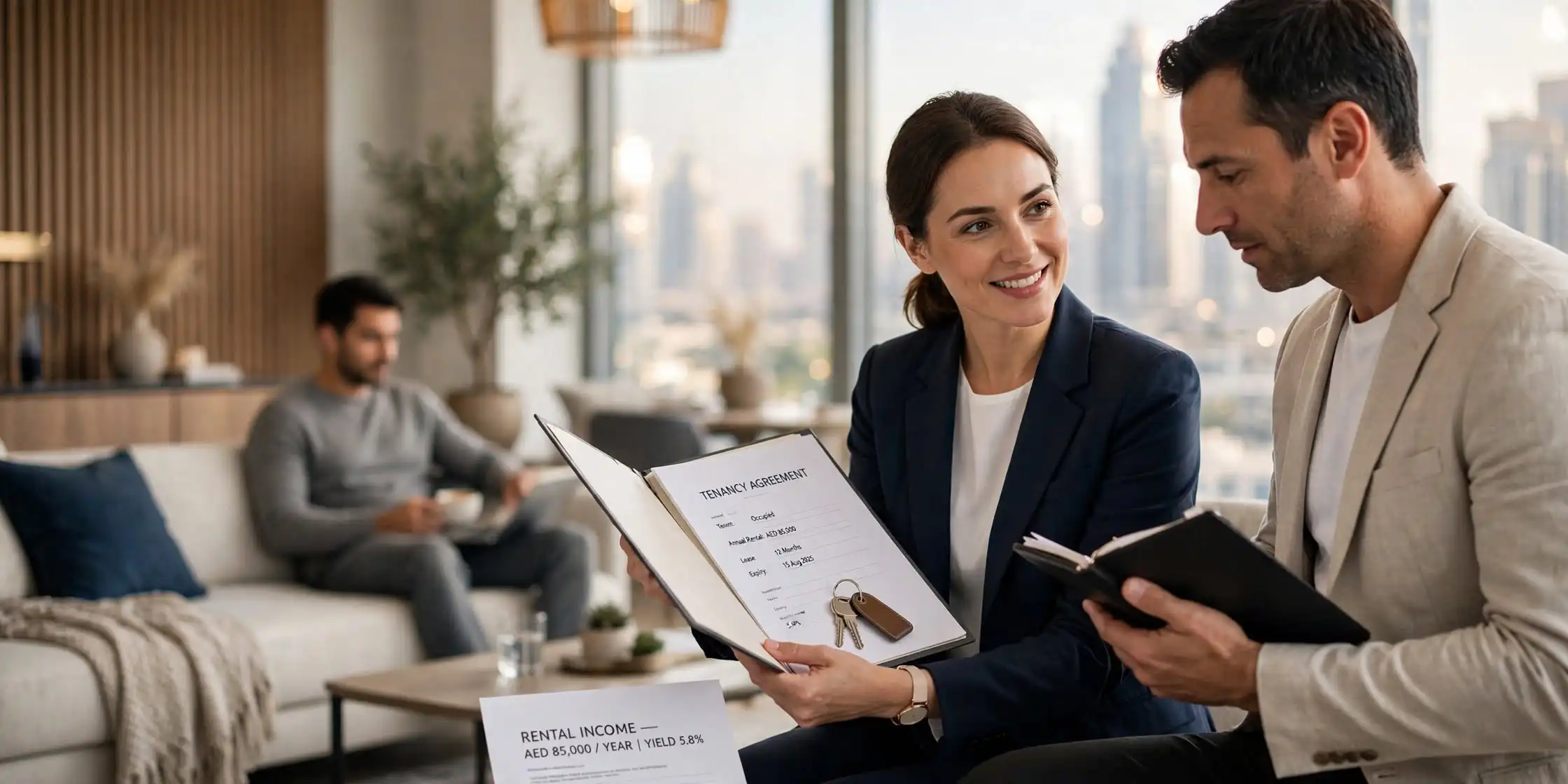
You can potentially sell a Dubai property while tenants are living in it. However, selling the property does not automatically end the tenancy.
The buyer will need to understand the existing rental agreement, rent payment arrangements, and any obligations that continue after the sale.
If you want the tenant to leave, you must follow the applicable Dubai tenancy laws and notice requirements. Do not assume that putting the property on the market gives you an immediate right to vacant possession.
Before listing, discuss with your agent whether the property is more suitable for an investor looking for rental income or a buyer who intends to live there.
Selling a Mortgaged Property
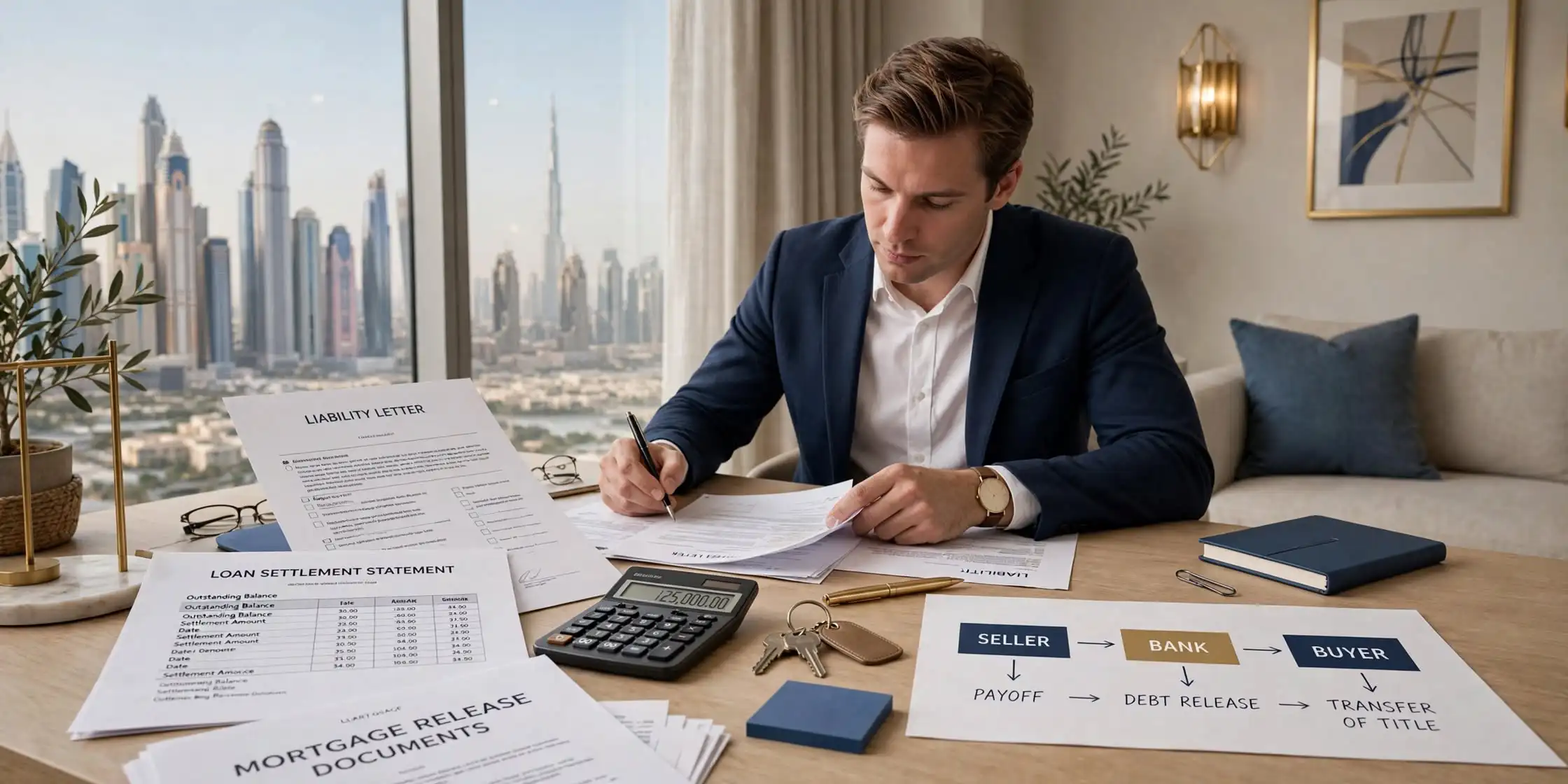
If your Dubai property still has a mortgage, you will normally need to coordinate with your bank before completing the sale.
The bank may issue a liability statement showing the amount required to settle the outstanding loan. The settlement and mortgage-release process must then be coordinated with the buyer's payment arrangements and the property transfer.
The exact process may differ depending on whether the buyer is paying cash or using mortgage finance.
Ask your bank about any early settlement charges, release fees and required documents before agreeing to a completion date.
Selling an Off-Plan Property
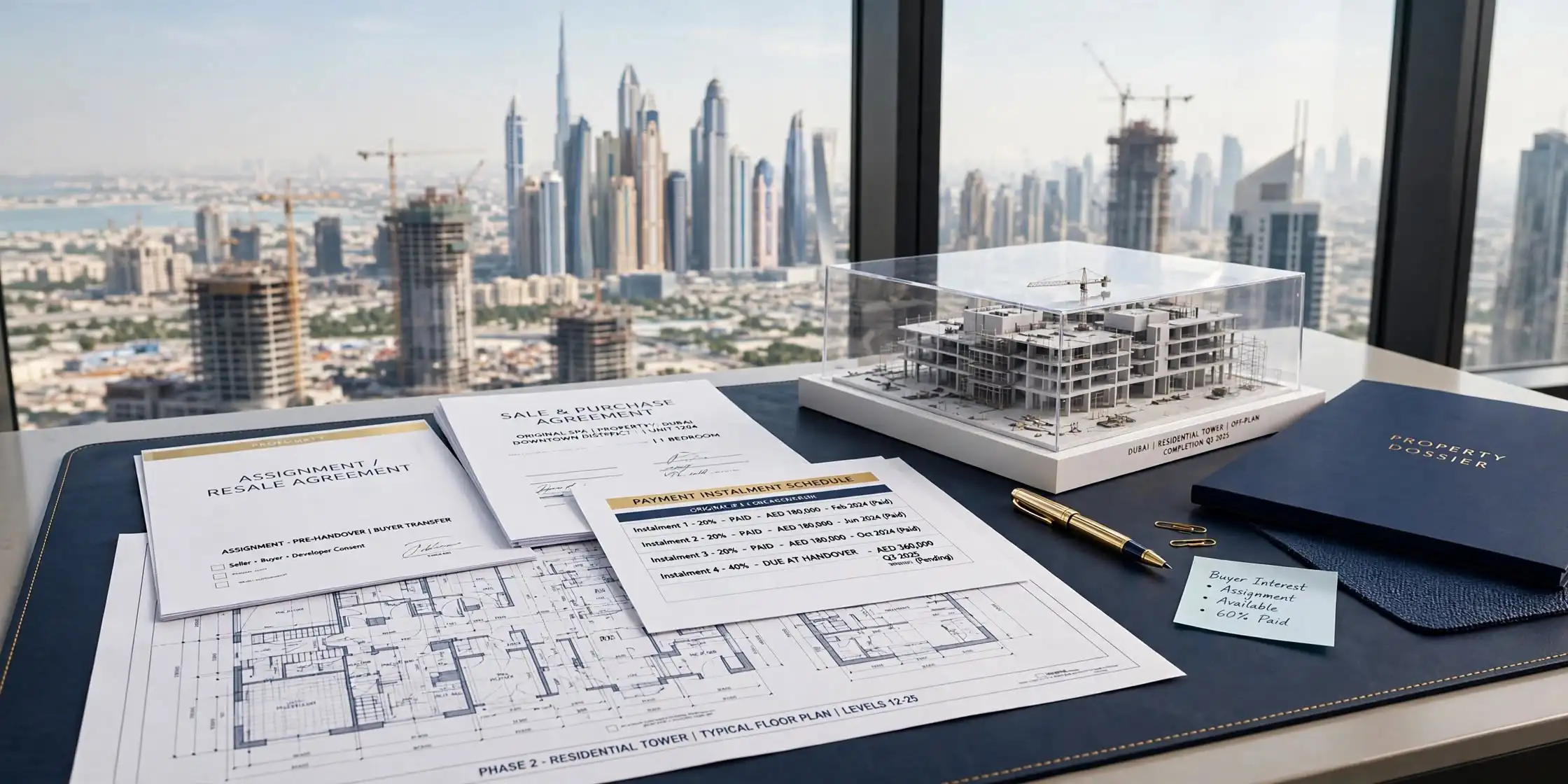
If you purchased a property during construction and now want to sell it before handover, the developer's resale conditions are particularly important.
Some developers require buyers to have paid a specified portion of the purchase price before allowing an assignment or resale. You may also need developer approval and updated registration documents.
Check the original sale and purchase agreement, outstanding instalments, applicable resale charges, and whether the new buyer can take over the remaining payment obligations.
If you're still deciding whether to sell before completion or wait until the property is ready, our guide to off-plan vs ready property in Dubai explains some of the differences worth considering.
Should You Sell or Keep Your Dubai Investment Property?
Before putting your Dubai property on the market, it's worth considering whether selling is the right decision for you.
If the property is rented, look at how much income you actually keep after service charges, maintenance, management fees, and other expenses.
You should also compare the property's current market value with what you originally paid and consider whether you expect to need the money for another purpose.
Selling may make sense if your investment goals have changed, the property no longer meets your needs, or you want to use the proceeds elsewhere. Keeping it may be worth considering if the rental income is satisfactory and you are comfortable with the ongoing costs and risks.
There is no single answer that works for every owner. A good decision should be based on your property's figures and your own circumstances, not just general headlines about Dubai property prices.
For UK-based buyers thinking about their next property purchase, Aarika's Dubai property investment guide for UK buyers provides further information about investing from Britain.
How Aarika Real Estate Can Help You Sell Your Dubai Property From the UK
Selling a Dubai property while living in the UK can be challenging, especially when managing buyers, viewings, and paperwork from abroad.

At Aarika Real Estate, we can help you understand your options and make the selling process easier.
- Property Valuation: Understand your property's current market value and pricing options.
- Selling Guidance: Get help understanding the steps involved in selling from the UK.
- Market Insights: Compare your property with similar properties in Dubai.
- Remote Selling Support: Discuss how viewings, buyer enquiries, and paperwork can be managed from overseas.
- Personalised Advice: Explore selling options based on your property and financial goals.
Thinking About Selling Your Dubai Property?
Book a discovery call with Aarika Real Estate to discuss your property, your plans, and the options worth considering.
Frequently Asked Questions About Selling Dubai Property From the UK
1. Can I sell my Dubai property while living in the UK?
Yes, UK-based owners can generally arrange to sell Dubai property from abroad. A licensed real estate agent can assist with marketing and buyer enquiries, while an appropriately authorised representative may handle certain transaction steps where permitted.
2. Do I need to visit Dubai to complete the sale?
Not necessarily. Depending on the transaction, you may be able to use a valid Power of Attorney to appoint someone to act on your behalf. Confirm the requirements with the relevant Dubai authorities before making arrangements.
3. Can I sell a Dubai property without an Emirates ID?
It may be possible, particularly if you're a non-resident owner. However, identification requirements differ between services and transaction procedures. Check which documents are accepted for your particular sale.
4. Can I sell my Dubai property if it has tenants?
Yes, a tenanted property can potentially be sold. The existing tenancy and the tenant's legal rights must be considered, and the buyer should be informed of the rental arrangements.
5. Can I sell a mortgaged property in Dubai?
Yes. You will normally need to coordinate the outstanding loan settlement and mortgage release with your bank as part of the transaction.
6. Do I need a UAE bank account to receive the money?
The required payment arrangements depend on the transaction, bank, and applicable DLD procedures. Check the current requirements before listing your property or agreeing on completion terms.
7. Will I have to pay UK tax when selling my Dubai property?
If you're a UK tax resident, you may owe Capital Gains Tax on a gain from selling overseas property. Your circumstances, allowable costs and applicable reliefs affect the calculation. Refer to HMRC's overseas property guidance and seek professional tax advice.
Thinking About Selling Your Dubai Investment Property?
Selling your Dubai property from the UK doesn't have to mean travelling back and forth for every step. With the right preparation, local support and a clear understanding of the costs and requirements, much of the process can be arranged while you're abroad.
The important thing is to understand your property's value, the documents you need, and how much you are likely to receive after the sale.
If you're considering selling, contact Aarika Real Estate to discuss your Dubai property and explore your next steps.