Choosing between an off-plan property and a ready property in Dubai mainly comes down to how you want to deploy capital, generate income, and manage investment risk.
Off-plan properties are purchased before completion, usually with a developer payment plan. They may suit investors who can wait for handover and want to spread payments over time. Ready properties are completed assets that can generally be inspected before purchase and may provide rental income sooner after the ownership transfer process.
The purchase price is only one part of the cost of an off-plan investment. Buyers should also assess registration, financing, service charges, furnishing, management and potential exit costs. Our guide to hidden costs of buying off-plan property provides a more detailed breakdown.
The comparison is not simply about which property type is “better.” Investors should compare the purchase price, payment schedule, financing, rental income, construction risk, service costs, expected holding period, and exit strategy before making a decision.
Quick Comparison Matrix
Off-Plan vs. Ready Property: Which Fits Your Investment Goal?
The better fit depends on what you want the property to achieve. Instead of comparing only purchase prices, investors should compare the timing of capital deployment, rental income, financing, risk, and potential exit. When rental income is a key objective, comparing net rental yield in Dubai can provide a more realistic view than comparing headline rental yields alone.
Understanding Off-Plan Property Investment
Buying off-plan means purchasing a property before or during its construction, based on architectural floor plans, master models, and the reputation of the Dubai property developer.
If you want to understand the purchase process in more detail, our guide to buying off-plan property in Dubai covers the key stages from financial preparation and project selection through registration, construction and handover.
The Advantages
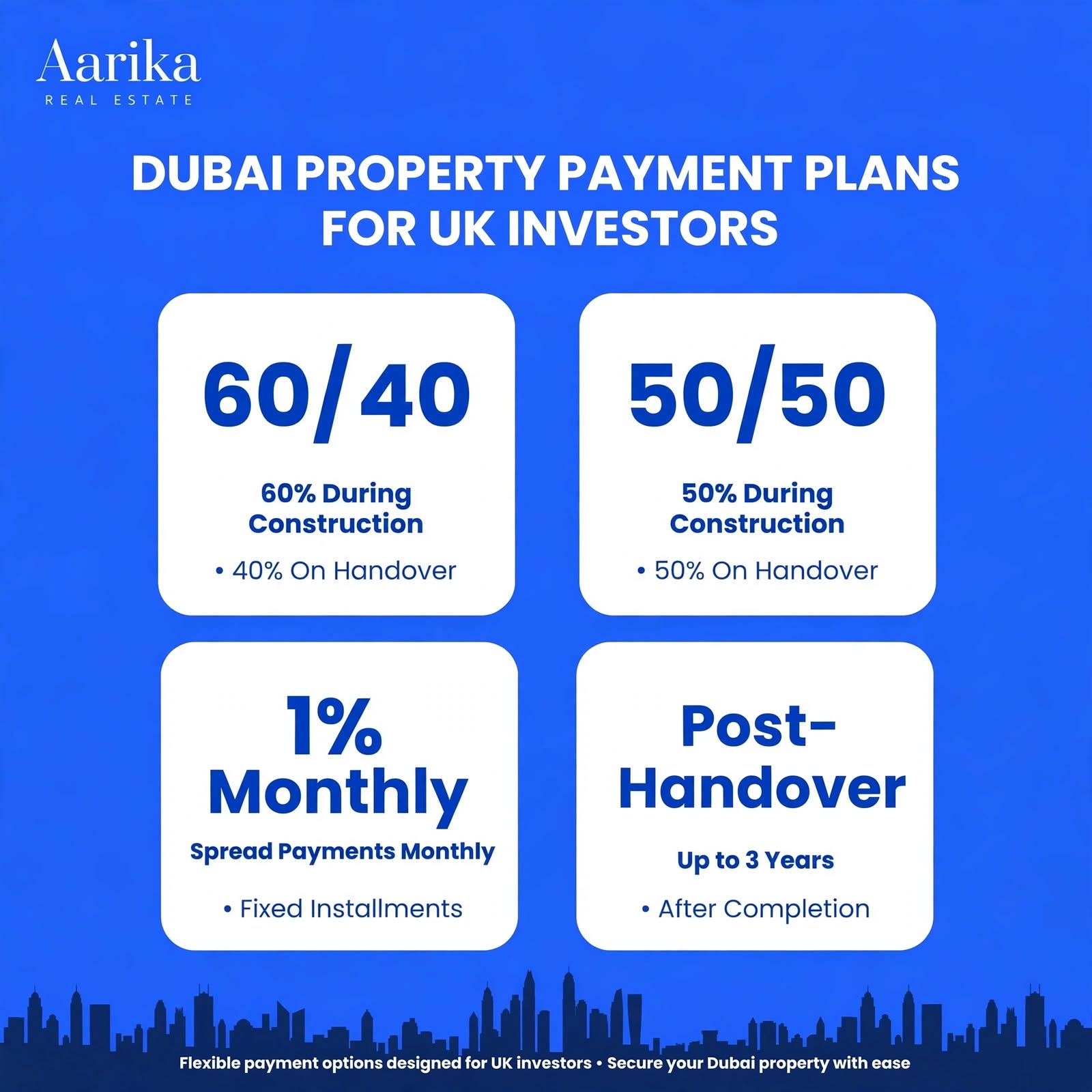
- Structured Payment Plans: Instead of tying up 100% of your capital, you pay in installments (e.g., 60% during construction, 40% upon handover) spread over several years.
- Capital Appreciation Potential: Buying early in a master community often allows investors to secure below-market entry pricing, capturing capital growth before the project is even completed.
- Brand New Infrastructure: Modern layouts, contemporary finishes, higher energy efficiency ratings, and modern amenities (co-working spaces, wellness pods).
- Lower Initial Maintenance: Brand-new units typically feature developer structural warranties, reducing immediate repair expenses.
The Risks & Trade-Offs
- Construction Delays: Projects can occasionally face completion delays due to supply chain factors, contractor issues, or regulatory approvals.
- Developer Default Risk: If a developer mismanages funds, project stagnation can occur. (Though Dubai's strict escrow laws mitigate this significantly, detailed below).
- Zero Immediate Cash Flow: You cannot rent out an off-plan property until it is handed over, meaning you receive no rental yield during the construction phase.
Understanding Ready Property Investment
Buying a ready property means purchasing a completed, existing building or villa on the secondary market, either vacant or with an active tenant in place.
The Advantages
- Immediate Rental Yield: The moment you receive your title deed, you can collect rent or move in yourself, generating immediate cash flow.
- What You See Is What You Get: You can physically inspect the apartment, check the build quality, evaluate the actual view, and test the building maintenance standards.
- Mortgage Eligibility: Ready properties are generally more suitable for traditional UAE mortgage financing, subject to the buyer's eligibility and the bank's lending criteria. Explore our UAE mortgage support to understand eligibility, financing options, and the application process.
- Established Communities: Mature infrastructure, fully operational amenities, mature landscaping, and proven community occupancy rates.
The Risks & Trade-Offs
- Higher Upfront Capital: Ready-property purchases generally require more capital upfront, including the 4% DLD sale registration fee, which may be allocated between buyer and seller according to the transaction agreement, plus applicable brokerage and other costs.
- Limited Immediate Upside: Because the property is already built and part of an established market, dramatic short-term capital appreciation is less common compared to early-stage off-plan launches.
- Renovation Costs: Older ready units may require cosmetic updates or HVAC replacements shortly after purchase.
The Regulatory Safeguards in Dubai
A common concern for international investors entering the off-plan market is developer security. Dubai's real estate regulatory framework provides several safeguards for off-plan buyers, including project-specific escrow requirements administered under Dubai's real estate regulations.
- Escrow Account Protection: Under UAE Law No. 8 of 2007, Buyer payments are deposited into a project-specific escrow account and are subject to regulatory controls governing how funds can be used and released. All payments must be deposited directly into a project-specific, RERA-approved escrow account that is strictly audited and released only to fund actual construction progress.
- Oqood Registration: Oqood is Dubai's system for registering off-plan property transactions in the provisional register before the final title deed is issued.
Regulatory safeguards are important, but investors should still verify the developer, project registration, escrow arrangements, contractual terms, payment schedule and other property-specific details before committing capital. Our Dubai real estate due diligence checklist provides a practical framework for these checks.
Decision Framework: Which Strategy Fits Your Goals?
To determine whether off-plan or ready property aligns with your portfolio, evaluate your primary investment objective:
- Choose Off-Plan if: You are building wealth over time, prefer spreading your payments across flexible developer milestones, and want maximum capital appreciation potential in emerging master communities.
- Choose Ready Property if: You prioritize passive income right away, want to utilize a bank mortgage to amplify your purchasing power, and prefer the security of investing in a proven, established location.
Frequently Asked Questions
1. Do I need UAE residency to buy property in Dubai?
No. You can legally buy and own freehold property in Dubai without holding a UAE residence visa.
2. Are there restrictions on selling my property later?
No. You have the right to sell, rent, or gift your freehold property at any time without special government permission.
3. Who pays the real estate agent commission?
In Dubai resale transactions, a 2% brokerage commission is commonly charged, although the exact fee and who pays it can depend on the transaction and brokerage agreement. For off-plan purchases, commission arrangements may differ by developer and project.
4. Is it safe to pay for off-plan property before it’s built?
Yes. All buyer payments must be deposited into a RERA-regulated escrow account, which ensures funds are used only for construction.
5. When do I start earning rental income?
You can only begin renting out your property and earning income once the project is completed and you receive the title deed.
6. What is an "Oqood"?
An Oqood is an interim registration document issued by the Dubai Land Department for off-plan properties, proving your legal right to the unit during construction.
Next Steps for Investors
Balancing off-plan capital growth against ready-property cash flow depends on your unique financial timeline.
- Explore Off-Plan: Review verified off-plan launches with flexible payment structures in high-growth corridors.
- Explore Ready Assets: Evaluate secondary market listings with proven tenant occupancy and strong rental yields.