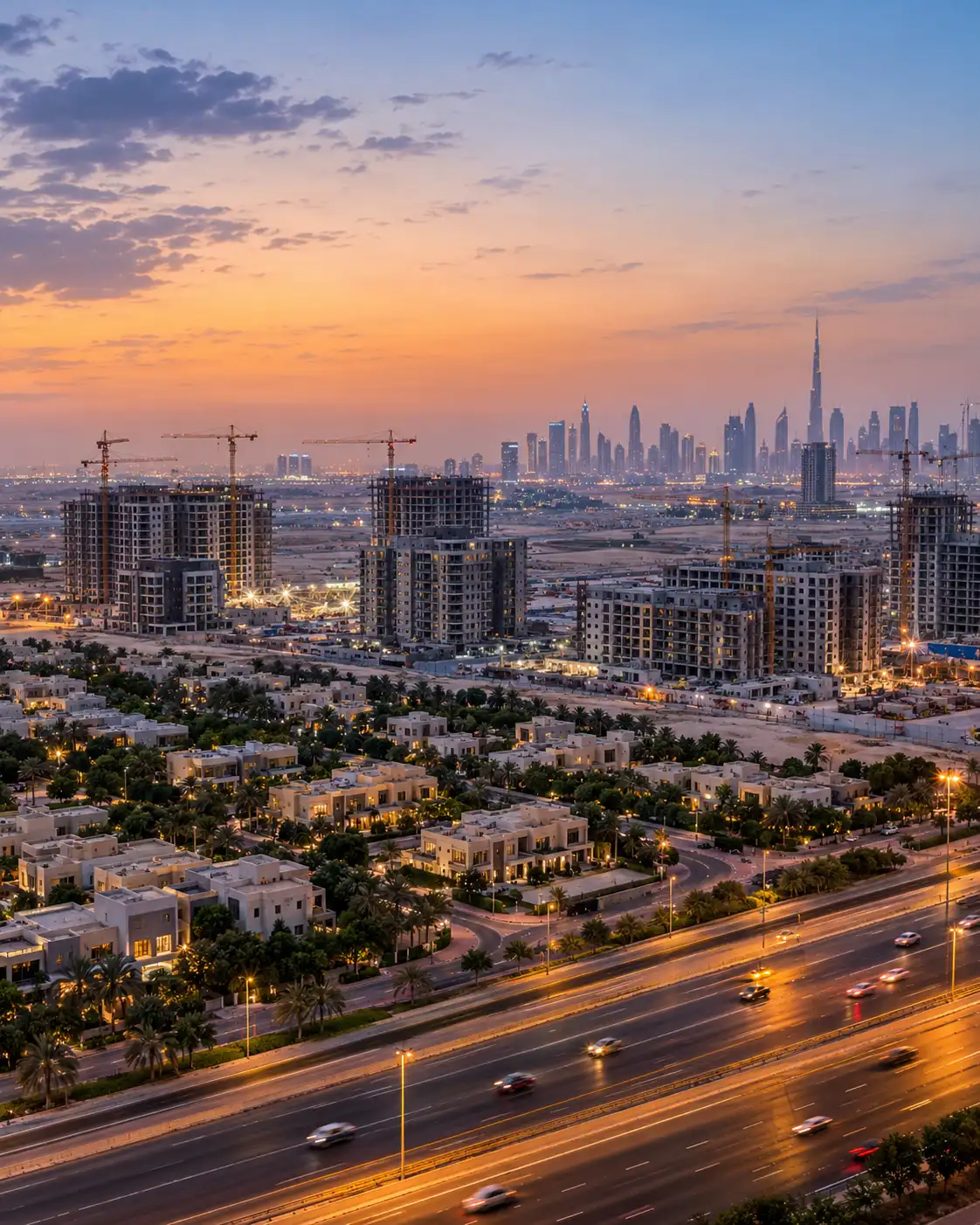

The better buy: how to choose the best off-plan developer. Buying an off-plan property in Dubai can be thrilling, but with so many off-plan developers on the market, such as Emaar, DAMAC, Sobha, and Nakheel, how do you decide which one to consider?
Every developer brings something different to the table. Emaar is well established for its communities, DAMAC for its branding projects, Sobha for construction quality, and Nakheel for its waterfront projects.
Don't forget this one; it's important: a popular developer isn't necessarily a good buy.
Where the project is, what you paid for it, how much you pay to build it, how you pay for it, and what kind of rental demand it generates will have an order of magnitude impact on your income.
In this article, we'll take a close look at Emaar, DAMAC, Sobha and Nakheel to help you compare developers and determine which is right for your investments.
If you're still exploring your options, take a look at our guide to the best off-plan projects in Dubai to compare developments by location, property type, and investment potential.
Key Takeaways
- Emaar is known for established communities.
- DAMAC focuses on branded and lifestyle developments.
- Sobha emphasises construction quality and finishing.
- Nakheel is known for waterfront developments.
- The best investment depends on the project's price, location, rental demand, and resale potential.
Emaar, DAMAC, Sobha and Nakheel: How Do They Differ?
Before examining each developer individually, here is an overview of their main characteristics.
Which developer should you consider?
It really depends on what matters most to you as a property buyer. Each developer has something different to offer, so here's where you might want to start:
- Emaar: Worth exploring if you prefer established communities, recognised locations and areas with existing residential demand.
- DAMAC: A good option to compare if you're interested in branded residences, different property types and varied payment plans.
- Sobha: Consider its projects if construction quality, finishing and attention to detail are high on your list.
- Nakheel: Explore its developments if you like waterfront locations, coastal living and large, well-planned communities.
Remember, choosing a well-known developer doesn't automatically make a property a good investment. Take a closer look at the individual project's location, price, specifications, and potential returns before making your decision.
Need Help Comparing Dubai Property Developments?
At Aarika Real Estate, we can help you compare available properties and identify developments that match your budget and investment objectives.
1. Emaar Properties | Established Master-Planned Communities
If you've explored Dubai properties, chances are you've already come across Emaar. It's one of the city's best-known developers, with a portfolio of residential and commercial projects across several popular locations.
Established in 1997, Emaar has built communities including Downtown Dubai, Dubai Creek Harbour, Dubai Hills Estate, and Arabian Ranches.
If we have to talk about why Emaar is worth owning in our real estate property list, it has to be its approach to creating a whole community rather than condominiums. It is a real estate developer for condominiums with shops, dining places, parks, gyms, and other everyday amenities.
This gives you more than just an apartment to think about - you can also factor in the neighbourhood, the location, and the tenants who might want to live there.
Notable Emaar Projects in Dubai
Some important Emaar developments include:
- Downtown Dubai: A well-established urban destination featuring residential towers, hotels, retail and entertainment facilities.
- Dubai Hills Estate: A master-planned community featuring apartments, villas, green spaces, a golf course and retail facilities.
- Dubai Creek Harbour: A waterfront development combining residential properties, retail and leisure facilities.
- Arabian Ranches: A residential villa community popular with families seeking suburban-style living.
What Makes Emaar Attractive to Property Investors?
Investors may prefer Emaar because of the option to buy in fully matured communities.
When you purchase in a known community, you can get a better feel for what you're putting your money into. You can research the location, availability of amenities, rental demand, occupancy rates, property values, and transactions in the area.
This is particularly convenient when acquiring a finished property. You get the possibility to visit the building, get to know the environment, observe the current offer of amenities of a community.
Emaar Development PJSC has also said it has sold some 85,500 homes since 2002. Its investor reports disclose more about future projects and finances.
Even so, a reputable developer doesn't mean each project will perform the same. You'll want to still look at each project to see how far along it is in construction, estimated handover, pricing and potential resale.
Investment Considerations
Emaar property may cost more due to the developer's reputation and its location. But does it always make sense to pay extra? Not quite. It's essential to weigh the entire picture when you compare prices.
An apartment in Dubai Hills Estate. Prior to purchasing, consider the following comparisons with other apartments in the community:
- Price per square foot: Are you paying a fair price compared with similar properties?
- Building age and condition: Is the property well-maintained?
- Views and floor level: Does the apartment's position justify its asking price?
- Service charges: How much will you pay to maintain the property each year?
- Rental prices: What are similar apartments currently renting for?
- Recent resale prices: What have buyers actually paid for comparable properties?
An established community gives you more information to work with, but that doesn't mean every property there is worth buying.
If you're investing from the UK, there's a little more to consider. You'll also need to think about rental income, ongoing ownership costs, changes in the GBP-AED exchange rate, and how easily you could sell the property later.
We've covered these points in more detail in our guide on whether Dubai property is a good investment for UK investors.
Advantages and Disadvantages of Emaar
Advantages
- Recognised developer with an extensive development portfolio.
- Established master-planned communities.
- Variety of residential property types.
- Publicly available investor disclosures.
- Opportunities to evaluate existing resale and rental comparables.
Disadvantages
- Some projects carry a higher initial purchase price.
- A brand premium may reduce initial rental yield if the purchase price is high.
- Performance varies between communities and individual buildings.
- New developments may still carry construction and handover risks.
Who should consider Emaar?
Emaar could be a choice if you are keen to invest in an established community with amenities and visible, well-known locations. This may be of interest to investors who are looking at long-term investment.
However, avoid selecting a property simply because it is being developed by a well-known name. Instead, compare how it stacks up on price, rental yield, and running costs against other properties developed by the competition.
2. DAMAC Properties | Branded Developments and Varied Residential Options
DAMAC Properties is another major name in Dubai's residential real estate market. Established in 2002, the developer has built a portfolio spanning residential communities, luxury properties, branded residences, and lifestyle-focused developments.
Its notable projects include DAMAC Hills, DAMAC Hills 2, DAMAC Lagoons, and several branded residential developments.
Notable DAMAC Projects in Dubai
- DAMAC Hills: A residential community featuring villas, townhouses, and apartments, with access to golf and leisure facilities.
- DAMAC Hills 2: A large residential development offering different property formats and lifestyle amenities.
- DAMAC Lagoons: A themed residential development designed around lagoon-inspired leisure and recreational facilities.
- Cavalli-branded residences: Luxury residential developments associated with fashion and lifestyle branding.
What Makes DAMAC Attractive to Property Investors?
Choose from the widest selection of real estate properties, including family homes, townhouses, villas, branded residences, and luxury apartments.
It enables customers to view properties in accordance with their budget, location, and purpose of buying.
When it comes to DAMAC off-plan developments, some plans include staged instalments or post-handover payment plans. But it depends on which development and launch you are looking at; you should refer to the specific plan to see if it is flexible or not.
Gain insight into the Dubai property payment plans for UK investors, if you're a buyer in the UK, for a better sense of booking payments, instalment plan timings, and post-handover payments.
As of 2026, DAMAC revealed that more than 50,000 units had been delivered, with a further 55,000 in its delivery pipeline. These figures are company-disclosed numbers, and not to be confused with standard on-time delivery rates.
Investment Considerations
The most important factor when evaluating DAMAC is the individual development.
A branded residence may attract buyers interested in its design and lifestyle positioning, but the brand itself does not guarantee higher rental income or resale appreciation.
Investors should investigate:
- Whether the property has comparable rental demand.
- Whether the launch price is competitive.
- What the payment schedule requires before and after handover.
- Whether the building has similar resale transactions.
- How much future residential supply may enter the surrounding area.
A flexible payment plan can make a property easier to purchase, but investors should also calculate the total acquisition cost and expected return.
Advantages and Disadvantages of DAMAC
Advantages
- Broad portfolio of residential and luxury developments.
- Different property formats and price segments.
- Branded residential offerings.
- Project-specific payment structures.
- Large development and handover portfolio.
Disadvantages
- Delivery performance should be evaluated at the project level.
- Branded properties may carry additional purchase premiums.
- Similar nearby developments can create resale competition.
- Flexible instalments do not necessarily mean better investment returns.
Who should consider DAMAC?
DAMAC is worth exploring for buyers interested in lifestyle-focused developments, branded residences, and different residential property formats. Investors should pay particular attention to the purchase price, construction progress, and future competing supply.
3. Sobha Realty | Construction Execution and Finishing Standards
Sobha Realty has established a strong presence in Dubai's residential market through developments that emphasise design, construction execution and finishing standards.

The developer is particularly known for its vertically integrated operating model, which brings several stages of the development process under its wider business structure.
Its Dubai portfolio includes Sobha Hartland, Sobha One and Sobha Hartland II.
Notable Sobha Projects in Dubai
- Sobha Hartland: A residential community in Mohammed Bin Rashid City featuring apartments, villas, landscaped spaces and community facilities.
- Sobha One: A residential development featuring apartments and views of surrounding golf and city landscapes.
- Sobha Hartland II: A newer master-planned residential development with villas, townhouses and apartments.
What Makes Sobha Different?
Vertical integration is a part of SOBHA's way of doing business.
The organisation highlights control at every stage of design, manufacturing, construction, and more. This can aid in quality control and coordination.
That said, buyers should be aware of the distinction between the builder's, operator's, and in-place operating model, and the specifications of the product that they are actually buying.
For example, construction quality should be assessed through:
- Material specifications.
- Interior finishing.
- Waterproofing and structural workmanship.
- Common-area maintenance.
- Building management.
- Independent inspection reports where available.
Sobha Realty saw sales totaling AED 30 billion for FY2025, representing a 30% yoy growth over the previous year (FY2024). The sales were AED 8 billion from other projects in UAQ (Downtown UAQ and Sobha Siniya Island). Although the above sales figures show the increasing trend of sales, it doesn't necessarily reflect the increase in appreciation in property prices and returns in terms of rent.
Investment Considerations
Care should be taken when comparing Sobha property to other similar projects in the same location.
A higher purchase price is justifiable for better specification, better layout, or superior location advantages. But the investor should assess whether those advantages will generate sufficiently higher rental income or sale price.
For users, the quality of construction and finish may have a more immediate impact on purchase satisfaction than short-term rental returns.
For investors, the key question is whether the property would generate a market-rate return, once consideration is given to the purchase price, service charges, vacancy, and operational costs.
Advantages and Disadvantages of Sobha
Advantages
- Vertically integrated development approach.
- Strong emphasis on design and finishing.
- Portfolio of residential communities and luxury developments.
- Publicly reported sales and development updates.
- Suitable for buyers who place importance on construction specifications.
Disadvantages
- Higher-quality specifications do not automatically justify every asking price.
- Investment performance varies between projects.
- Some developments have a shorter resale history than older established communities.
- Premium positioning can affect initial rental yields.
Who should consider Sobha?
Considering Sobha for those who prefer quality of construction execution, interior specifications and lifestyle; investors should check premium bought with rental & resale realization.
4. Nakheel | Waterfront and Large-Scale Master Developments
Nakheel is one of Dubai's most recognisable master developers, particularly known for its waterfront developments and large-scale community planning.
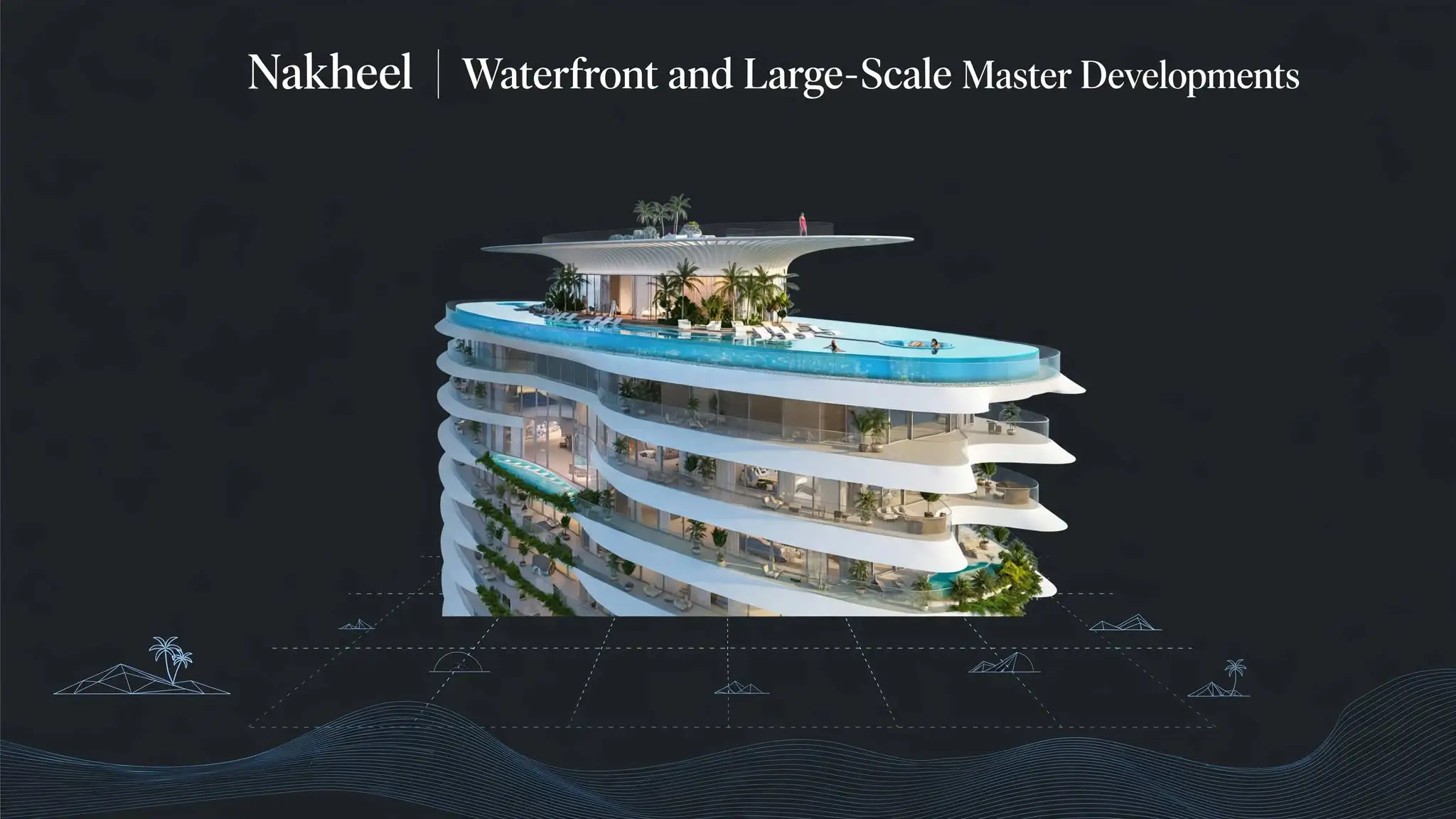
Its portfolio includes some of the emirate's most recognisable destinations, including Palm Jumeirah, Palm Jebel Ali and Dubai Islands.
Nakheel is part of Dubai Holding Real Estate, which also includes Meraas and Dubai Properties.
Notable Nakheel Projects in Dubai
- Palm Jumeirah: An established artificial island featuring luxury villas, apartments, hotels, and waterfront residences.
- Palm Jebel Ali: A large-scale waterfront development planned to expand Dubai's coastal residential and leisure offerings.
- Dubai Islands: A waterfront destination planned around residential, hospitality, leisure, and tourism uses.
What Makes Nakheel Attractive to Property Investors?
The one thing Nakheel has on its side is a track record in waterfront master communities.
Waterfront property appeals to buyers who want to be close to the water, to have views and a lifestyle experience, and to be in a few select spots.
However, location by the water does not make a good investment. You should compare the premium you pay for a property on the water against the rental income, service charges, and resale value.
Palm Jumeirah is a proven location with an existing set of residents and hospitality properties. New projects like Palm Jebel Ali and Dubai Islands, on the other hand, involve a separate type of investment, as investors need to take into account infrastructure provision, construction periods, and timings of occupation.
Investment Considerations
When comparing Nakheel properties, investors should consider:
- Whether the development is already established or still under construction.
- Access to roads, transport, and everyday amenities.
- The availability of comparable waterfront properties.
- Construction and handover timelines.
- Service charges and property maintenance.
- Future competing residential and hospitality supply.
It is also important to distinguish between Nakheel's master-development role and the developers responsible for individual buildings within wider districts.
For example, Jumeirah Beach Residence was developed by Dubai Properties, not Nakheel.
Advantages and Disadvantages of Nakheel
Advantages
- Recognised waterfront development portfolio.
- Experience with large-scale master planning.
- Established destinations such as Palm Jumeirah.
- Exposure to prime coastal residential locations.
- Part of Dubai Holding Real Estate.
Disadvantages
- Emerging waterfront developments may have longer investment horizons.
- Infrastructure and community maturity differ between locations.
- Waterfront purchase premiums can affect rental yields.
- Individual project timelines and specifications require verification.
Who should consider Nakheel?
Nakheel may be of interest to investors looking for waterfront property, mature communities, or development that is to come over a longer period of time. The difference between existing destinations and future projects is a key factor in risk.
Payment Plans: How Do Emaar, DAMAC, Sobha and Nakheel Compare?
When it comes to payment plans for off-plan property in Dubai, there is no standard format for Emaar, Nakheel, DAMAC or Sobha developments.
Some projects will have one much higher booking payment, some could have payments in instalments over the entire construction period, others may have payments on completion and others after handover.
Rather than selecting a developer on the basis of the payment plan they promote, compare the terms of the properties you are considering.
The best payment plan is one you can comfortably manage without putting your investment budget under pressure.
How to Evaluate a Dubai Property Developer Before Buying
Regardless of which developer you choose, completing the right checks before purchasing is essential.

1. Verify the Developer and Project Registration
Check whether the developer and project are appropriately registered with the Dubai Land Department. If you are purchasing remotely, our guide explains how to buy property in Dubai from the UK, including the main steps to consider before committing to a property.
For off-plan purchases, confirm that the project details match the development being marketed to you.
2. Check the Project's Escrow Account
Escrow accounts for the qualification off plan development projects is mandatory in Dubai.
Rather than wiring the deposit in accordance with advice from the agents, buyers ought to confirm the escrow information.
3. Review Construction Progress
Use the Dubai REST application and the Dubai Land Department's Project Status Enquiry service to review available project information.
Compare recorded progress with the developer's expected handover timeline.
4. Compare Actual Property Transactions
Do not rely exclusively on advertised prices.
Review comparable transactions for properties with similar:
- Locations.
- Bedrooms and layouts.
- Floor levels.
- Views.
- Building specifications.
- Completion status.
This helps establish whether the asking price is competitive.
5. Calculate Net Rental Yield
Gross rental yield does not represent the amount an investor actually retains.
A more useful calculation is:
Net rental yield = (Annual rental income - Annual operating expenses) ÷ Total investment cost × 100
Include relevant service charges, maintenance, management expenses, and vacancy assumptions.
6. Evaluate Resale Demand
Look at resale sales from recent quarters and properties you are competing against in the same community.
Just because the developer has a good reputation doesn't mean that every single apartment gets snapped up and achieves a premium.
Before making any investment, it is important to look into the current level of actual transactions and availability of similar units.
Frequently Asked Questions
1. Which is the best property developer in Dubai?
Emaar is renowned for communities, DAMAC for branded projects, Sobha for quality of construction, and Nakheel for waterfront projects. The one that is right for you will depend on your budget and the property.
2. Is Emaar better than DAMAC?
Emaar is known for its projects in mature communities, whereas DAMAC has a broader portfolio of branded and lifestyle projects. Compare property prices, location, and yield potential ahead of a decision.
3. Is Sobha better than Emaar?
Regardless of the choice of the community, your decision now hinges on building quality versus location: Sobha specialises in the quality of construction and finishing, whereas Emaar is more community-based.
4. Is Nakheel a reliable property developer?
For example, Nakheel has Palm Jumeirah. Be aware of the registration of the project, stage of construction, and tentative handover date of the project before making an investment.
5. Which developer offers the best payment plans in Dubai?
No one is better than another. Payment plans differ depending on the project. How do the booking amount, the instalments and the post-handover payments compare?
6. How can I check a Dubai developer's delivery record?
Completion through the Dubai Land Department: The Project Status Enquiry service of the Dubai Land Department can be used to monitor project completion and progress. Alternatively, check project status through Dubai REST.
Find the Right Dubai Property for Your Investment Goals
Playing the 'which developer to choose' game is only one decision when purchasing property in Dubai. Ultimately, the location, price paid, finishing quality, payment conditions, and rental demand will more likely determine how well a certain property performs.
Aarika Real Estate sales will assist you in finding a Dubai property according to your budget, location, and investment goals.
From an off-plan apartment to a family villa or a property on the waterfront, our team will assist you in comparing available developments and what matters before you buy.
Looking to invest in Dubai real estate? Contact Aarika Real Estate to explore property opportunities and find a development that matches your investment goals.