

Buying property in Dubai from the UK is possible without becoming a UAE resident first, but the process is different from buying a property in Britain.
You need to understand where foreign buyers can own property, how to choose the right property and developer, what costs apply, how ready and off-plan purchases differ, and how the transaction is registered in Dubai.
For UK buyers purchasing remotely, due diligence is particularly important. The British Government's guidance on buying property in the UAE recommends checking the developer or agent, confirming that foreigners can purchase in the chosen area, understanding all costs and payment obligations, and taking appropriate legal advice before committing. For a broader overview of the buying process, see our Dubai Buying Guide.
This guide explains how to buy property in Dubai from the UK, from deciding what you want to buy through to registration, handover, and managing the property from Britain.
Can UK Citizens Buy Property in Dubai?
Yes. UK citizens can buy property in Dubai in designated areas where foreign ownership is permitted. Dubai Land Department (DLD) states that foreign ownership is permitted in designated freehold areas, while property transactions must be registered with the Department to be legally recognised.
You do not have to become a UAE resident simply to purchase eligible property.
This means a UK buyer can potentially purchase a Dubai property as a non-resident and use it as:
- An investment property
- A rental property
- A second home
- A future residence
- A long-term portfolio asset
However, property ownership and UAE residency are separate matters. Buying a property does not automatically give you residency.
If residency is also part of your plans, see our Dubai Golden Visa for UK Citizens guide.
How to Buy Property in Dubai From the UK
The exact process depends on whether you are buying a ready property or an off-plan development, and whether you are paying cash or using financing.
For a typical purchase, the process can be viewed as:
For a resale property, the transaction normally involves the seller, buyer, agent, developer where applicable, and the Dubai Land Department registration process.
For an off-plan property, you will also need to assess the developer, project registration, escrow arrangements, payment schedule, and expected completion.
Step 1: Decide Why You Are Buying Property in Dubai
Before looking at apartments or villas, decide what you want the property to achieve. This sounds obvious, but it can change almost every decision that follows.
A UK buyer looking for rental income may prioritise:
- Tenant demand
- Purchase price
- Expected rent
- Service charges
- Vacancy risk
- Property management
- Resale demand
Someone buying for future relocation may care more about:
- Schools
- Healthcare
- Community facilities
- Commute
- Property size
- Lifestyle
- Long-term location suitability
An off-plan investor may place greater emphasis on:
- Developer track record
- Payment structure
- Construction progress
- Expected handover
- Future supply
- Exit options
So don't start with:
“What is the best property in Dubai?”
Start with:
“What am I trying to achieve with this property?”
That gives you a much more useful filter for the rest of the buying process.
Step 2: Set Your Budget and Decide How You Will Pay
Your budget should include more than the advertised property price.
Before viewing properties, establish:
- How much cash you can commit
- Whether you need a mortgage
- Your available deposit
- Your expected transaction costs
- Your currency-conversion requirements
- Your future payment obligations
- Your expected ownership costs
If you are considering financing, it is sensible to understand your borrowing position before choosing a property.
For UK buyers, the funding route may broadly be:
Cash Purchase
You fund the purchase without a mortgage. This can make the transaction simpler, but you still need to budget for applicable purchase and ownership costs.
UAE Mortgage
Non-resident buyers may be eligible for financing from UAE lenders, but terms vary by lender and buyer profile. Do not assume that the mortgage terms available to a UAE resident will be identical to those available to a UK-based non-resident.
Developer Payment Plan
This is particularly relevant to off-plan property.
Instead of paying the full purchase price immediately, the developer may structure payments across booking, construction milestones, handover and, in some cases, a post-handover period.
The important point is to calculate the entire payment obligation, not just the initial amount.
For more detail, see Aarika's Dubai Mortgage Guide and relevant mortgage support.
Step 3: Choose the Right Dubai Location
Don't compare communities solely by asking price. Compare the building, service-charge structure, competing supply, tenant profile, and expected resale audience within that community.
Different communities have different:
- Property prices
- Tenant profiles
- Rental demand
- Supply levels
- Development pipelines
- Transport connections
- Lifestyle characteristics
- Resale markets
For example, a UK investor focused on rental income may assess locations such as JVC, JLT, Business Bay, or other established rental markets differently from someone looking for a family home or premium waterfront property.

When comparing locations, consider:
A popular community is not automatically the right choice for every UK buyer. The location should match your budget, investment objective and holding period.
Step 4: Decide Between Ready and Off-Plan Property
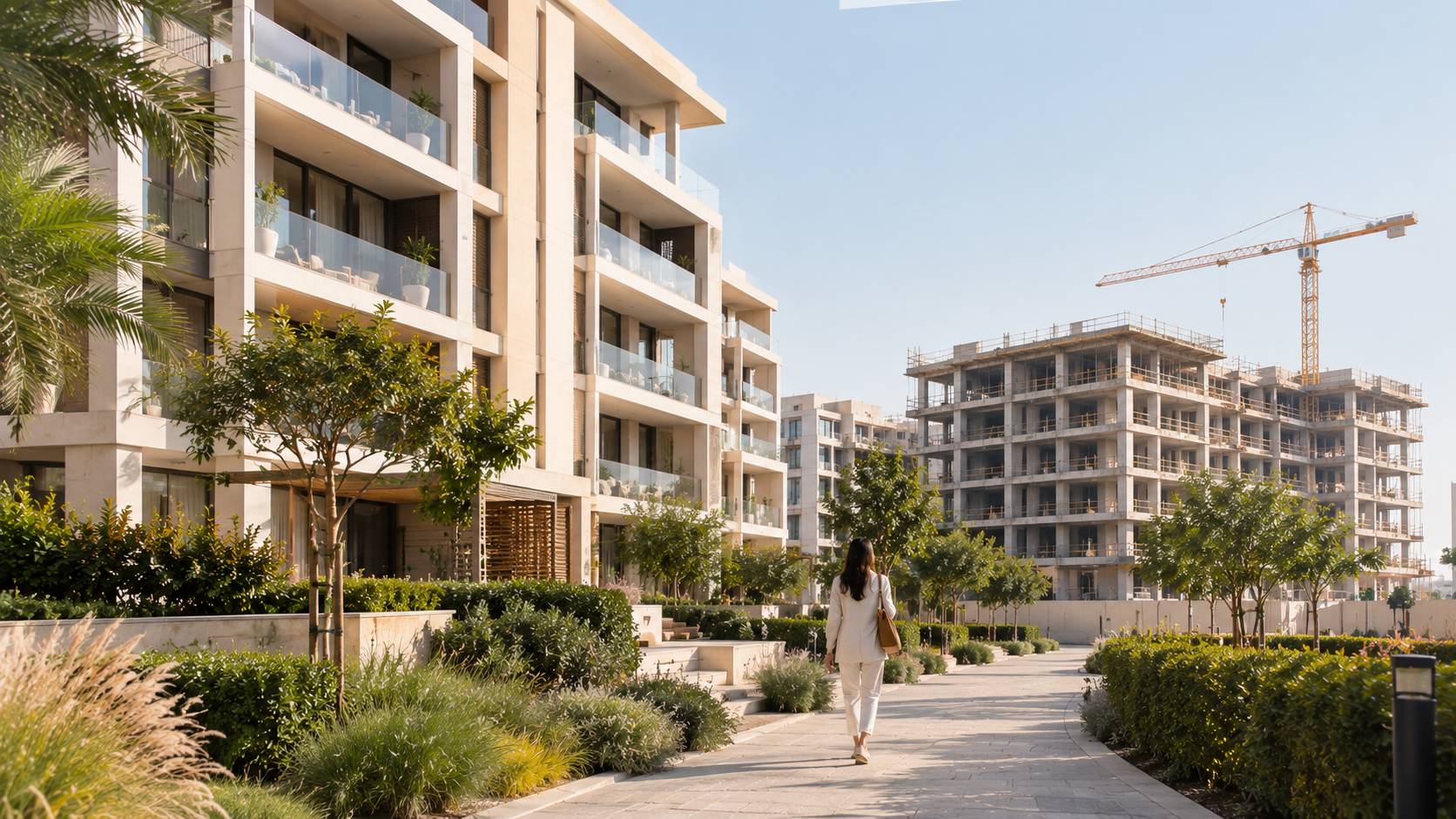
One of the biggest decisions when buying property in Dubai from the UK is whether to purchase a completed property or an off-plan development.
Ready Property
A ready property already exists, allowing you to assess the actual building and unit.
Potential advantages include:
- You can inspect the property
- Existing rental evidence may be available
- You may be able to rent it sooner
- You can assess the surrounding community
- The physical condition can be evaluated before purchase
Off-Plan Property
An off-plan property is purchased before completion.
Potential considerations include:
- Developer track record
- Construction timeline
- Payment plan
- Project registration
- Escrow arrangements
- Handover conditions
- Future supply
- Resale strategy
The British Government's UAE property guidance advises buyers considering off-plan property to research the developer and project, understand payment obligations, and check for hidden costs and what happens if the project is delayed.
There is no universal answer as to whether ready or off-plan is better. The right choice depends on what you are trying to achieve.
Step 5: Shortlist the Property and Developer
Once you have chosen a location and property type, compare specific properties rather than simply selecting the first attractive listing.
For a ready property, examine:
- Asking price
- Comparable properties
- Property condition
- Building quality
- Service charges
- Existing tenancy
- Rental history where available
- Resale potential
For off-plan, also examine the developer and project.
Look at:
- Previous projects
- Delivery history
- Construction record
- Project registration
- Escrow arrangements
- Payment schedule
- Expected completion
- Unit specifications
- Amenities
- Competing developments
- Future supply
A well-known developer does not automatically make every project suitable for every investor. The specific property and project still need to make sense.
Need Help Finding the Right Dubai Property?
Connect with a Dubai property advisor who can help you compare suitable properties, locations, developers, and payment options based on your requirements.
Step 6: Check That the Agent and Project Are Properly Registered
This is particularly important when buying from the UK because you may be relying heavily on information provided remotely.
The British Government's guidance advises buyers to check that the developer or real estate agent is approved by the relevant regulatory authority. It also recommends confirming that a foreign buyer is permitted to purchase the property in the chosen area.
For off-plan property, Dubai's regulatory framework provides specific mechanisms for project registration and escrow.
Dubai Land Department's project-registration service states that developers register projects through the Oqood system and that the process includes opening an escrow account for off-plan sales.
DLD's guidance for marketing off-plan projects also states that brokers marketing off-plan projects must ensure the project is licensed and registered and that an associated escrow account exists.
Verify the relevant information through official Dubai channels.
Step 7: Carry Out Property Due Diligence
This is one of the most important stages of buying property in Dubai from the UK. Your due diligence should cover both the property and the transaction.
For a Ready Property, Check:
- Seller's ownership
- Property registration
- Existing mortgage or encumbrances
- Service-charge position
- Property condition
- Existing tenancy
- Building condition
- Sale terms
For an Off-Plan Property, Check:
- Developer credentials
- Project registration
- Escrow arrangements
- Construction progress
- Payment schedule
- SPA terms
- Expected completion
- Cancellation provisions
- Default provisions
- Unit specifications
- Handover requirements
Don't rely entirely on brochures, sales presentations, or projected returns. Marketing material tells you why a property is being sold. Due diligence is about determining whether the purchase actually makes sense for you.
For a deeper review, use Aarika's Dubai Real Estate Due Diligence Checklist.

Step 8: Compare the Total Cost, Not Just the Property Price
A common mistake is to calculate affordability using only the advertised property price.
Your total acquisition cost can include:
- DLD registration/transfer charges
- Registration-related fees
- Brokerage fees
- Developer or administrative charges
- Mortgage costs
- Valuation fees
- Legal fees
- Currency-transfer costs
- Other transaction-specific expenses
For completed property transactions, Dubai Land Department's property-sale registration service currently lists the sale registration fee as 2% for the buyer and 2% for the seller, along with additional title-deed, map, knowledge, innovation, and service-partner fees depending on the transaction.
That is why you should confirm the exact fee breakdown for your transaction rather than assuming that every Dubai property purchase has the same final cost.
For a mortgage, DLD's current service information also lists a 0.25% mortgage registration fee on the mortgage value. And your costs don't necessarily stop after completion.
Depending on the property, you may also have:
- Service charges
- Maintenance
- Insurance
- Property management
- Furnishing
- Leasing costs
The UK Government's guidance on buying property abroad also recommends budgeting for additional expenses such as bank-transfer costs, legal fees, power-of-attorney costs, furniture, insurance, and other property-related expenses.
For a deeper breakdown, see Hidden Costs of Buying Off-Plan Property in Dubai.
Step 9: Understand the Payment Plan
If you are buying off-plan, don't judge a payment plan by its headline percentage. You need to map the complete schedule.
For example, a development could have:
- 20% on booking
- Construction-stage payments
- 40% at completion
- A post-handover balance
The important question isn't simply:
“How much do I pay today?”
It is:
“How much capital will I need at every stage of the purchase?”
Before committing, calculate:
A lower initial payment can still result in a substantial financial commitment later. Make sure the payment schedule fits your actual finances rather than relying on future assumptions.
Explore Off-Plan Properties in Dubai
Compare Dubai off-plan properties, payment plans and development opportunities before deciding which projects fit your budget and investment objectives.
Step 10: Make the Offer and Sign the Appropriate Agreement
For a ready-property resale, the process generally begins with finding a property and making a formal offer.
The British Government's UAE property guidance says that if the offer is accepted, a deposit is usually required and the buyer should also expect transfer and estate-agent fees.
In Dubai resale transactions, the parties may proceed through the relevant sale agreement/MOU process before completing the transfer.
Before signing anything, understand:
- Purchase price
- Payment terms
- Deposit
- Completion date
- Seller obligations
- Buyer obligations
- Cancellation provisions
- Transfer conditions
- Outstanding fees
- Any conditions attached to the transaction
Do not treat the contract as administrative paperwork.
The contract determines your rights and obligations.
For significant transactions, independent legal advice can help you understand the terms before you commit.
Step 11: Complete the NOC and Dubai Land Department Registration
For a ready property in a freehold area, the transaction will generally proceed through the Dubai Land Department property-registration process.
DLD's current property-sale registration service requires identification documents and, for freehold-area sales, an electronic NOC from the developer. The service results in an electronic title deed after the registration process is completed.
The NOC, or No Objection Certificate, is an important part of many resale transactions because it confirms that the developer has no objection to the transfer, subject to the relevant requirements being met.
At completion, the buyer will need to settle the applicable balance and registration fees before the ownership transfer is completed.
For non-resident foreign buyers, DLD's service specifically recognises a valid passport as an identity document for the registration process.
Step 12: Understand Oqood When Buying Off-Plan
The process differs when purchasing an eligible off-plan property.
Dubai Land Department provides a provisional registration process for initial off-plan sales, with the service operating through the Oqood portal. DLD states that the process can register units sold off-plan where the value has not yet been fully paid.
For a non-resident buyer, DLD's listed documentation includes a valid passport alongside the sale and purchase contract for the relevant provisional-registration process.
The exact documentation and procedure can vary by project and transaction, so your developer or authorised representative should explain:
- What registration is required
- Which documents you need
- What fees apply
- When registration occurs
- What confirmation you receive
- How the registration relates to final ownership documentation
Keep copies of every agreement, receipt, registration document and payment record.
Step 13: Can You Buy Property in Dubai Remotely From the UK?
This is one area where UK buyers should be particularly careful.
If you are purchasing from Britain, establish in advance:
- Who is representing you locally
- How your identity will be verified
- How documents will be signed
- How payments will be made
- How registration will be completed
- How property inspections will be handled
- Who will manage the property after completion
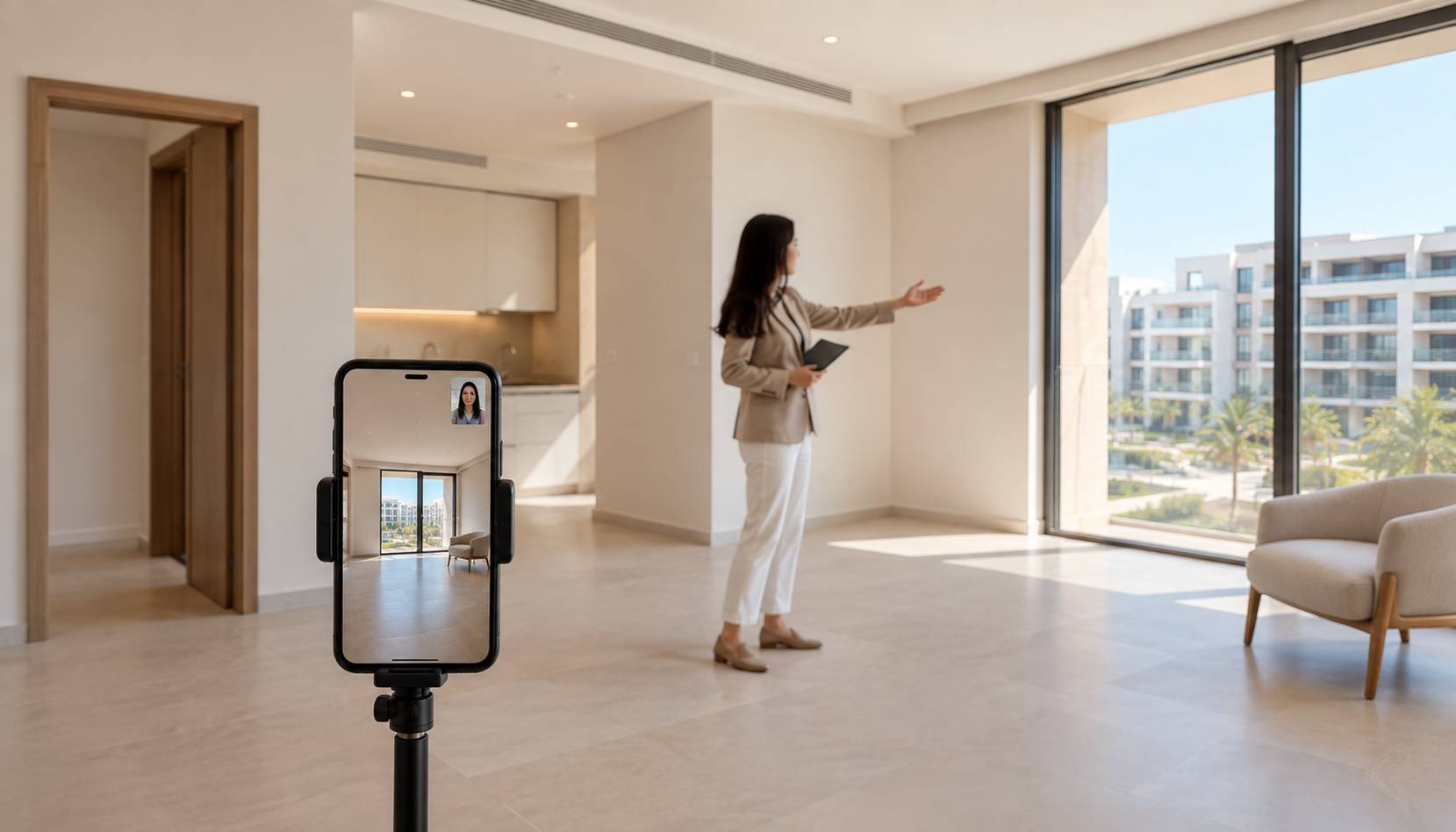
Depending on the transaction, a legally authorised representative or power of attorney may be relevant. The appropriate process should be confirmed with the professionals handling the transaction.
The British Government specifically recommends independent legal and financial advice when purchasing property in the UAE and notes that overseas buyers should understand their contractual obligations.
Should You Visit Dubai Before Buying?
If possible, visiting the property and community can be useful, particularly for a ready property.
You can inspect:
- The building
- The surrounding area
- Access and transport
- Amenities
- Noise levels
- Construction nearby
- The actual unit
However, an inability to visit personally does not mean that you should skip independent verification. Instead, establish a reliable local process for inspections, documentation and communication.
Step 14: Arrange Your Mortgage If You Need One
UK buyers may consider UAE financing, but non-resident mortgage conditions can differ from resident lending.
Before relying on a mortgage, establish:
- Whether you are eligible
- Maximum loan amount
- Required deposit
- Interest/profit rate
- Loan term
- Valuation requirements
- Bank fees
- Insurance requirements
- Approval timeline
Do not select a property first and assume financing will automatically be available.
A better sequence is:
Budget → Financing eligibility → Property price range → Property selection
rather than:
Property selection → Hope financing works
For current mortgage calculations, see Aarika's Dubai Mortgage Calculator.
Step 15: Prepare for Handover and Property Management
Buying the property is not necessarily the end of the process.
For a ready property, you may need to arrange:
- Final inspection
- Snagging where relevant
- Utilities
- Insurance
- Property management
- Tenant arrangements
- Maintenance
For an off-plan property, you should also monitor:
- Construction progress
- Handover schedule
- Final payments
- Inspection
- Snagging
- Ownership documentation
- Service charges
- Utility arrangements
If you will remain in the UK, decide before completion who will manage the property locally.
That could include:
- Tenant communication
- Rent collection
- Maintenance
- Inspections
- Renewals
- Contractor coordination
A property that looks attractive on paper can become much less convenient if the owner has no plan for local management.
How Much Does It Cost to Buy Property in Dubai From the UK?
There isn't one fixed cost for every UK buyer because the final amount depends on the property, transaction type, financing, and applicable charges.
Your budget should consider four categories:
For a ready-property sale, DLD's current registration information provides the official fee structure for the sale transaction.
For off-plan purchases, additional project-specific or developer-related charges may apply, so confirm the payment schedule and all applicable costs before signing.
UK Buyer Checklist: What Should You Check Before Buying?
Before committing to a Dubai property from the UK, work through this checklist:
The British Government's own guidance similarly recommends checking the developer/agent, confirming foreign ownership eligibility, understanding the payment schedule and costs, conducting a price check and obtaining appropriate legal advice.
FAQs About Buying Property in Dubai From the UK
1. Can a British citizen buy property in Dubai?
Yes. British citizens can buy property in Dubai in designated areas where foreign ownership is permitted. UAE residency is not automatically required simply to purchase eligible property.
2. Can I buy property in Dubai without living there?
Yes, non-resident foreign buyers can purchase eligible Dubai property. The transaction still needs to follow the applicable registration, identification, and contractual requirements.
3. Can I buy Dubai property remotely from the UK?
In many cases, much of the process can be handled remotely, depending on the transaction. You should establish how documents, identity verification, payments, registration, inspections, and any required representation will be handled before proceeding.
4. Is it better to buy ready or off-plan property in Dubai?
Neither is automatically better. Ready property allows you to assess an existing unit and potentially rent it sooner, while off-plan property can involve staged developer payments and requires additional attention to project, developer, escrow, construction, and handover considerations.
5. How much deposit do I need to buy property in Dubai?
The required amount depends on whether you are buying with cash, using a mortgage or purchasing through a developer payment plan. For resale transactions, the British Government's UAE guidance says a deposit is usually around 10%, but the actual contractual requirement can vary.
6. What are the main costs when buying property in Dubai?
Potential costs include DLD registration charges, brokerage, developer or administrative charges, legal costs, and financing-related expenses. The exact amount depends on the transaction, so confirm the full cost before signing.
7. Can UK residents get a Dubai mortgage?
Non-resident foreign buyers may be eligible for UAE mortgage financing, but lending criteria and terms vary by bank and buyer profile. Obtain current eligibility and indicative terms before relying on financing for a purchase.
8. Do I need a UAE bank account to buy property in Dubai?
The exact banking requirements depend on the transaction and payment method. Confirm the accepted payment process with the developer, seller, bank and relevant professionals before transferring funds.
9. Do I need a lawyer to buy property in Dubai?
A lawyer is not necessarily mandatory for every transaction, but independent legal advice can help a UK buyer understand contractual obligations, ownership issues and transaction risks. The British Government recommends independent legal and financial advice when purchasing property in the UAE.
10. Can I rent out my Dubai property while living in the UK?
Yes, subject to the applicable Dubai rental and property-management requirements. If you are renting the property remotely, plan who will handle tenants, contracts, maintenance, and rent collection locally.
Final Thoughts
Buying property in Dubai from the UK is not simply a matter of finding a property online and transferring money.
A stronger approach is to work through the purchase in order:
For UK buyers, the remote nature of the transaction makes verification especially important.
Before committing, make sure you understand what you are buying, who you are buying from, what you will pay, when you will pay it, how the transaction will be registered, and what your plan is after completion.
If you are still comparing locations, property types or payment structures, the next step is to evaluate the options against your own budget and investment objective rather than choosing based only on advertised prices or projected returns.
Planning to Buy Property in Dubai From the UK?
Aarika can help you narrow the market based on your budget, investment objective, preferred location, and whether you are considering ready or off-plan property.


.svg)