.webp)
Before the Burj Khalifa rose 828 meters into the Dubai skyline, engineers spent years building something far less visible - its foundation.
Nearly 50 meters deep, anchored into the ground, designed not for aesthetics, but for stability.
Because in real estate, what determines long-term success is rarely what you see on the surface.
The same principle applies to markets.
Headlines, sentiment, and short-term fluctuations are visible. They dominate conversations, shape perceptions, and influence decisions. But they rarely reflect the underlying strength of a market.
That strength lies in deeper forces - capital flows, investor activity, population growth, and economic positioning.
And today, in Dubai’s real estate market, there is a growing disconnect between what headlines suggest and what the data actually shows.
The Narrative vs The Reality
Over the past few months, a familiar narrative has started to emerge.
Concerns around oversupply. Predictions of price corrections. Signals of a potential slowdown.
This is not unusual. Every high-growth market eventually enters a phase where momentum stabilises and sentiment becomes cautious.
But there is a difference between a market slowing down and a market breaking down.
To understand which one we are in, it is not enough to listen to headlines. You have to observe behavior.
And the behavior of capital tells a very different story.
A Reality Check from the Ground
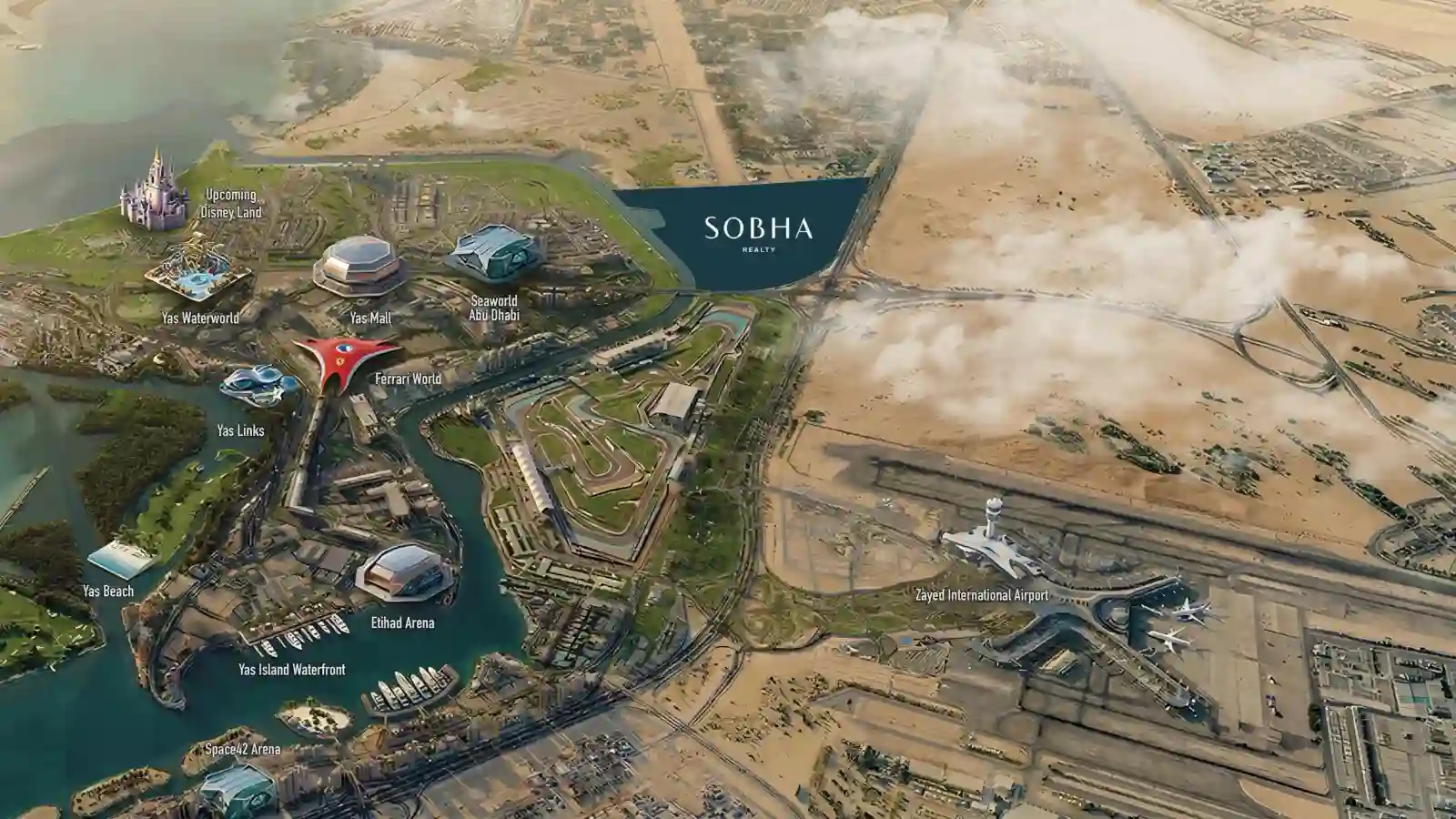
In early 2026, a project launched in Abu Dhabi - Manchester City Yas Residences by Ohana Development.
Within just 72 hours, the project recorded over AED 6 billion (approximately $1.63 billion) in sales, with the first phase completely sold out. (Gulf News)
This was not an isolated spike driven by hype.
It was a reflection of liquidity, demand, and investor confidence.
Because projects do not sell out at that scale in that timeframe unless:
Capital is available
Buyers are decisive
Confidence is already present
This is what real demand looks like.
Not headlines. Not projections. Actual transactions.
What the Data Is Actually Saying
If we step back and look at the broader market, the numbers reinforce the same trend.
According to Dubai Land Department:
AED 761 billion worth of real estate transactions were recorded in 2024
Over 226,000 transactions took place - the highest ever recorded
More than 110,000 new investors entered the market
This is not a market losing momentum.
It is a market expanding in participation.
Now look at where the money is coming from.
The UAE continues to be one of the largest global destinations for migrating wealth.
Around 7,200 high-net-worth individuals moved to the UAE in 2024
The number is expected to rise further, with projections of nearly 9,800 millionaires relocating in 2025
Each of these individuals represents not just residency - but purchasing power.
And purchasing power translates directly into real estate demand.
The Segment That Should Be Weak - Isn’t
In most global markets, luxury real estate is the first segment to slow down when uncertainty increases.
But Dubai is showing the opposite pattern.
In 2024:
The city recorded over 435 transactions above $10 million
It outperformed traditional luxury hubs like London and New York
This is critical.
Because high-value transactions are not driven by speculation.
They are driven by conviction.
And conviction capital does not enter a market expecting it to collapse.
Understanding Market Cycles - Without Emotion
Dubai’s real estate market has gone through multiple cycles over the past two decades.
The 2008 global financial crisis
The 2014-2016 correction
The 2020 pandemic slowdown
The post-2021 recovery cycle
Each of these periods was accompanied by strong negative sentiment.
Each of them was described, at the time, as a turning point for the worse.
And yet, each cycle eventually transitioned into recovery and growth.
This is not unique to Dubai. It is how real estate markets function globally.
Cycles are not signs of failure. They are mechanisms of reset.
Why Investors Misread This Phase
The biggest mistake investors make is confusing uncertainty with risk.
Uncertainty simply means outcomes are not obvious.
Risk means fundamentals are deteriorating.
Right now, Dubai is experiencing uncertainty - not structural risk.
The underlying indicators remain strong:
Population continues to grow
Global capital continues to enter
Transaction activity remains high
Policy environment remains stable
This combination does not align with a market heading toward collapse.
It aligns with a market transitioning into its next phase.
Who Should Actually Be Concerned
Not all participants benefit equally in every phase of the market.
Short-term investors - especially those relying on rapid price appreciation - are more exposed during periods of stabilisation.
Highly leveraged buyers may also face pressure if liquidity tightens.
But long-term investors operate differently.
They are not focused on short-term price movements.
They are focused on whether the underlying drivers of demand remain intact.
And in Dubai’s case, those drivers - migration, capital inflow, and global positioning - are still strengthening.
The Gap Between Perception and Reality
Markets rarely present opportunities in a way that feels comfortable.
When everything looks positive, prices have already adjusted.
When uncertainty appears, opportunities begin to form.
This is the gap where informed investors operate.
Today, that gap is visible.
The narrative suggests caution. The data suggests strength.
And the difference between those two perspectives is where decisions are made.

.svg)